Handling corrosive chemicals in industrial pipelines requires suitable valve materials and dependable backflow prevention. A PTFE Lined Swing Check Valve for Corrosive Fluid Handling helps protect process lines from reverse flow. Flow Line Valve provides lined valve solutions with manufacturing support from Ahmedabad, Gujarat, India.
Understanding How PTFE Lining Protects Industrial Check Valves
A swing check valve is an automatic, non-return valve designed to allow fluid movement in one direction while restricting reverse flow. It operates without requiring manual intervention during normal operation.
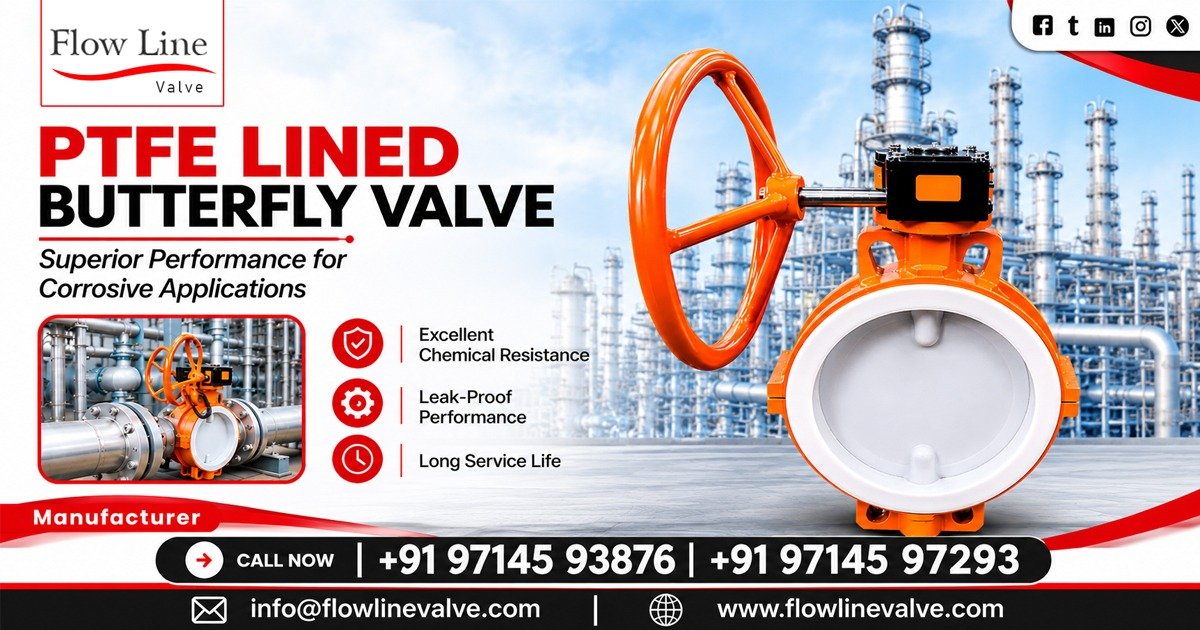
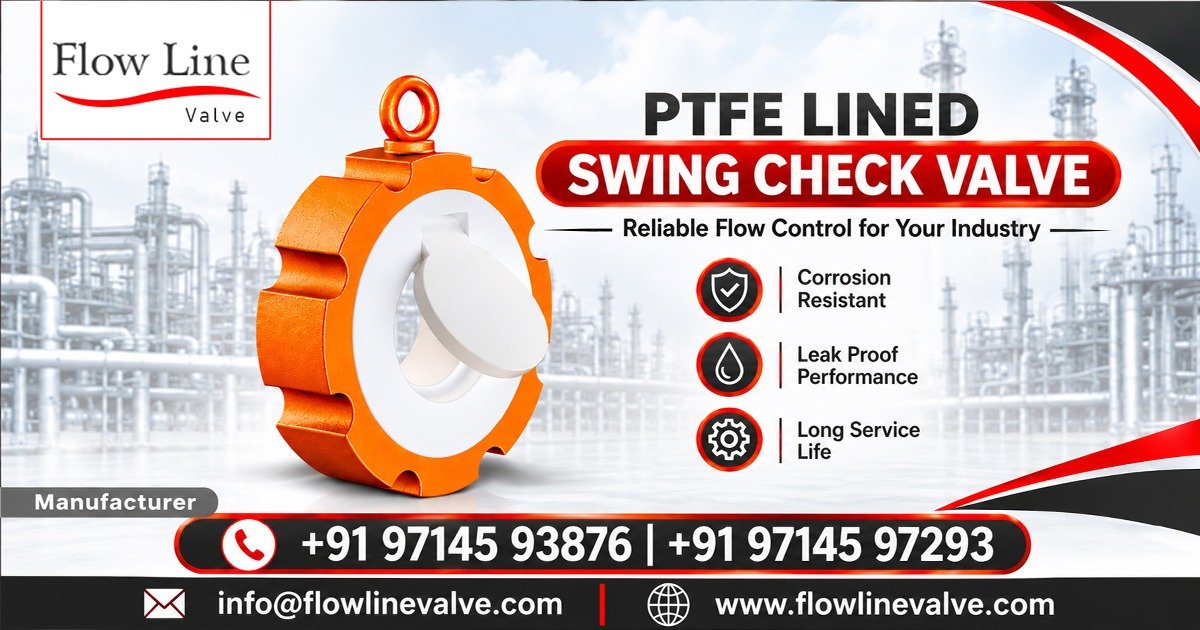
In corrosive fluid applications, conventional metal surfaces may experience chemical attack, depending on the process media and operating conditions. A PTFE-lined construction provides a chemically resistant barrier between the fluid and the metallic valve body.
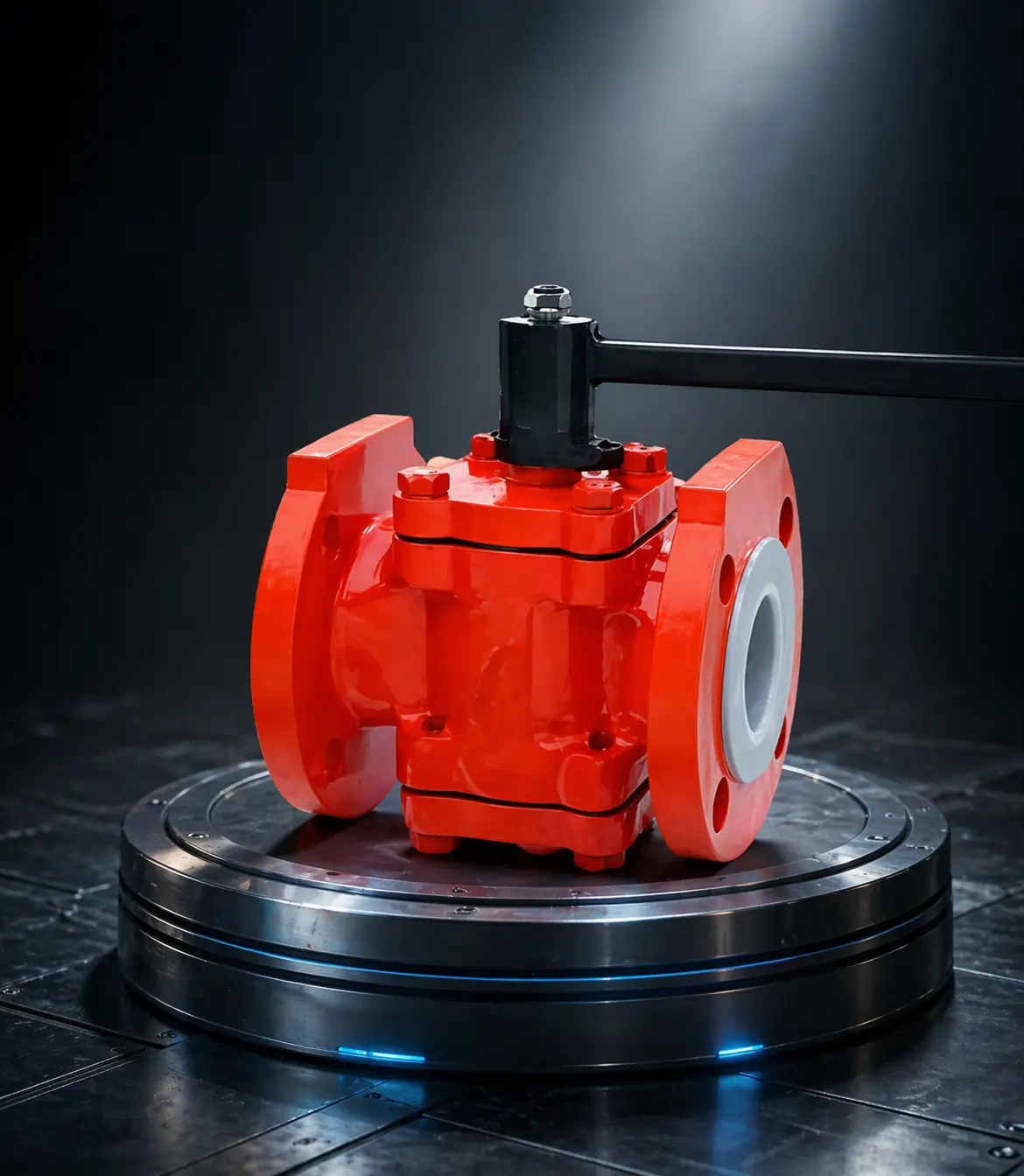
The valve generally consists of:
- Metallic Body: Provides the main structural support and pressure containment.
- PTFE Lining: Creates a protective internal surface for handling compatible corrosive media.
- Swing Disc: Moves with the forward fluid pressure and returns towards the seat when flow reduces or reverses.
- Seating Arrangement: Helps restrict reverse fluid movement when the valve closes.
- Flanged Connections: Allow the valve to be connected with compatible pipeline flanges.
These valves are relevant to chemical processing, pharmaceutical manufacturing, speciality chemical plants, and other industrial facilities where controlling reverse flow is important.
Selecting a Valve According to Chemical and Pipeline Conditions
Choosing the correct valve requires more than matching the pipeline diameter. Buyers should evaluate the actual process conditions before finalising an order.
| Selection Factor | What Buyers Should Check |
| Valve Size | Match the nominal bore with the pipeline design and required flow rate. |
| Chemical Compatibility | Confirm PTFE compatibility with the chemical concentration and process media. |
| Pressure Rating | Check operating pressure, pressure fluctuations and maximum system pressure. |
| Temperature Range | Verify that the lining and other internal components suit the operating temperature. |
| Body Material | Select cast iron, cast steel, ductile iron or stainless steel according to project requirements. |
| Disc Construction | Confirm the disc material and lining arrangement. |
| End Connection | Check flange drilling, facing and dimensional compatibility. |
| Installation Position | Confirm the valve’s permitted orientation and pipeline arrangement. |
Important selection considerations:
- Identify the chemical composition and concentration of the fluid.
- Consider whether the pipeline carries liquid, gas or a fluid containing suspended particles.
- Evaluate the expected flow velocity and pressure drop.
- Check the possibility of water hammer or sudden flow reversal.
- Confirm whether the process involves frequent starting and stopping.
- Consider accessibility for inspection and maintenance.
A suitable selection reduces the chances of premature lining damage, unsuitable sealing and operational difficulties.
What Happens Inside a Swing Check Valve During Operation?
The working mechanism is based on fluid pressure and the movement of a hinged disc.
Step 1: Forward Flow Begins
When fluid enters from the designated inlet, its pressure pushes against the disc. The disc swings away from the seating surface, allowing fluid to pass through the valve.
Step 2: Disc Remains Open
As long as sufficient forward flow is maintained, the disc stays open. The valve design allows fluid to travel through the pipeline without requiring an external actuator.
Step 3: Flow Starts Decreasing
When the pump stops or upstream pressure reduces, the forward flow begins to slow down. The disc gradually moves towards its closed position under the influence of gravity and changing fluid pressure.
Step 4: Reverse Flow Is Restricted
If downstream pressure becomes higher than upstream pressure, the disc moves against the seat and restricts reverse flow.
This automatic operation helps protect pumps, process equipment and connected pipeline sections from unwanted backflow.
However, actual closing behaviour depends on valve design, installation orientation, flow conditions and system pressure.
Installation and Maintenance Checks That Protect Valve Performance
Correct installation is essential for maintaining the performance of a lined check valve. Improper alignment or unsuitable operating conditions can affect disc movement and sealing.
Installation guidelines:
- Follow the manufacturer’s specified flow direction.
- Install the valve in the permitted orientation.
- Ensure the pipeline is properly aligned before tightening flange connections.
- Use compatible gaskets and suitable bolting arrangements.
- Avoid excessive flange loading that may affect the valve body or lining.
- Keep sufficient clearance for inspection and maintenance.
- Flush the pipeline before commissioning to remove construction debris and foreign particles.
Maintenance practices:
- Inspect the internal lining for cracks, wear, deformation or visible damage.
- Check the disc for unrestricted movement.
- Examine the seating surface for deposits or foreign material.
- Inspect flange joints for signs of leakage.
- Investigate unusual vibration, noise or repeated backflow.
- Follow a maintenance schedule based on chemical exposure and operating frequency.
If the valve does not close properly, possible reasons include damaged seating surfaces, deposits around the disc, incorrect installation or unsuitable pressure conditions.
Quality Checks Before Finalising Your Valve Purchase
Industrial buyers should evaluate the complete valve assembly rather than considering only the PTFE lining.
Before placing an order, verify the following:
1. Lining Integrity: Check that the internal lining is continuous and free from visible defects.
2. Body Construction: Confirm the selected body material and its suitability for the required pressure conditions.
3. Disc Movement: Ensure the swing mechanism operates freely without unnecessary obstruction.
4. Dimensional Accuracy: Verify the face-to-face dimensions, nominal size and flange drilling.
5. Pressure and Temperature Suitability: Match the offered configuration with actual operating conditions.
6. Inspection and Testing: Discuss the applicable body, seat and lining inspection procedures with the supplier.
7. Documentation: Request technical drawings, material details and applicable test reports.
8. Spare Parts: Confirm the availability of relevant replacement components and maintenance assistance.
A clear technical specification helps buyers compare different suppliers and avoid misunderstandings during procurement.
Adapting Valve Configuration to Different Process Requirements
Chemical processing facilities do not always operate under identical conditions. The required valve construction may change according to pipeline design, chemical properties and installation requirements.
For example:
- A pharmaceutical process may require careful consideration of chemical compatibility and internal surface condition.
- A chemical transfer pipeline may require a suitable combination of lining, body material and pressure rating.
- A water treatment facility may need a valve configuration compatible with its treatment chemicals.
- A speciality chemical plant may require additional attention to operating temperature and fluid concentration.
Flow Line Valve’s product information lists PTFE and PFA lining options, different metallic body materials and multiple size and pressure configurations. The final selection should be confirmed against the specific project requirements.
Services
Flow Line Valve can be approached for product-related requirements involving lined industrial valves.
- Product Requirement Discussion: Understand pipeline conditions, chemical media and backflow prevention requirements.
- Valve Configuration Guidance: Discuss suitable lining, body material, size and pressure rating.
- Technical Specification Coordination: Review dimensional and connection requirements before ordering.
- Product and Supply Assistance: Coordinate product-related enquiries and delivery requirements.
Location
Industrial facilities across Gujarat use specialised lined valves for chemical transfer, process pipelines and fluid-handling systems. PTFE-lined check valves are relevant to businesses requiring suitable corrosion protection and backflow control. Industrial locations include Ahmedabad, Surat, Vadodara, Rajkot, Gandhinagar, Bharuch, Ankleshwar, Vapi, Valsad, Dahej, Jamnagar, Morbi, Mehsana, Sanand, Changodar, Naroda, Vatva, Kalol, Halol, Savli, Ankleshwar GIDC, Panoli, Nandesari and Kutch.
Why Choose Flow Line Valve for Industrial Valve Requirements?
Selecting a valve supplier involves understanding product construction, material compatibility and the technical requirements of the application.
Flow Line Valve specialises in PTFE, PFA and FEP lined industrial valves, pipes and fittings.
Customers can discuss:
- Lined valve requirements for corrosive fluid applications.
- Suitable valve size, body material and lining selection.
- Technical specifications and pipeline connection details.
- Product enquiries and supply coordination.
With manufacturing support from Ahmedabad, Gujarat, India, the company serves industrial requirements involving specialised lined valve products.
Visit the official website, https://flowlinevalve.com/, to explore its product range and submit your enquiry.
Frequently Asked Questions (FAQ)
Q1: Why is PTFE lining used in swing check valves?
A: PTFE lining provides a chemically resistant internal surface for compatible corrosive fluids. It helps reduce direct contact between the process media and the metallic valve body.
Q2: Can a PTFE lined swing check valve handle different industrial chemicals?
A: It can handle many compatible chemicals, but suitability depends on chemical concentration, temperature, pressure and exposure conditions. Always verify compatibility before purchasing.
Q3: How do I identify the correct valve size for my pipeline?
A: Consider the nominal pipeline diameter, required flow rate, pressure drop and connection dimensions. The valve should also match the system’s operating conditions.
Q4: What maintenance is required for a lined swing check valve?
A: Periodically inspect the lining, disc movement, seating arrangement and flange connections. Check for deposits, leakage and signs of wear to identify potential problems early.
Conclusion
Corrosive fluid pipelines require careful valve selection to manage chemical exposure and prevent reverse flow. A PTFE Lined Swing Check Valve for Corrosive Fluid Handling offers a suitable option when material compatibility, pressure and installation conditions are properly evaluated. Flow Line Valve supports industrial requirements from Ahmedabad, Gujarat, India.
Contact Flow Line Valve to discuss your PTFE-lined swing check valve requirements, technical specifications and suitable product configurations for your industrial pipeline.
Call Us:
+91 97145 93876
+91 93289 35785
+91 97145 97776
Mail Us:
flowlinevalve@gmail.com
sales@flowlinevalve.com