Chemical processing plants need reliable ways to monitor liquid movement without exposing pipeline components to aggressive chemicals. A PTFE Lined Sight Flow Indicator for Chemical Pipelines helps operators observe flow conditions, while Flow Line Valve supports industrial requirements from Ahmedabad, Gujarat, India.
How a Sight Flow Indicator Improves Visibility Inside Chemical Pipelines
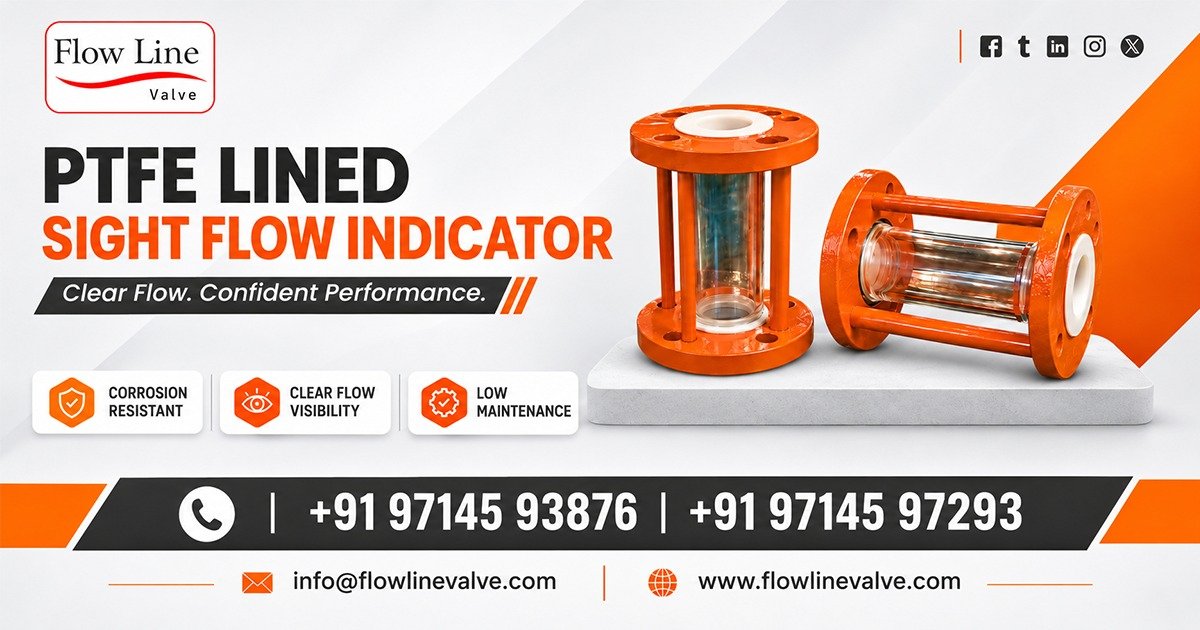
A sight flow indicator is an inline pipeline component that allows operators to visually check liquid movement through a viewing window. It helps identify whether fluid is flowing, whether the pipeline is filled, and whether changes in liquid appearance require attention.
In chemical processing environments, the equipment must handle both process pressure and chemical exposure. A PTFE lining creates a protective barrier between the metallic body and the process fluid, while the viewing glass provides a visible inspection point.
A PTFE-lined design is particularly relevant when pipelines carry:
- Acids and alkaline solutions.
- Corrosive chemical mixtures.
- Industrial solvents.
- Process liquids used in chemical manufacturing.
- Liquids transferred through dosing and storage systems.
The indicator can be installed at a suitable inspection point in a pipeline, allowing operators to monitor the process without opening the line or interrupting normal operation.
Selecting the Correct Indicator for Your Pipeline Conditions
Choosing the right equipment requires more than matching the pipeline diameter. Buyers should evaluate the chemical composition, operating conditions, connection arrangement, and inspection requirements.
| Selection factor | What buyers should check |
| Body material | Carbon steel or stainless steel suitability |
| Lining material | PTFE or PFA compatibility with the process fluid |
| Viewing glass | Toughened borosilicate glass |
| Pipeline size | Required nominal diameter and connection dimensions |
| Pressure rating | Operating and design pressure |
| Temperature | Normal and maximum process temperature |
| End connection | Flanged, screwed, or butt-weld arrangement |
| Flow direction | Bidirectional or single-direction requirement |
Chemical compatibility: Check the concentration of chemicals, operating temperature, and possibility of chemical mixtures before finalising the lining material.
Pressure and temperature: The selected model must remain within its specified operating limits under normal and changing process conditions.
Pipeline configuration: Confirm face-to-face dimensions, flange drilling, available installation space, and accessibility for inspection.
Viewing arrangement: Select a suitable viewing design according to the required visibility and the nature of the liquid being monitored.
Maintenance access: Consider whether operators can safely inspect and service the viewing assembly without disturbing nearby equipment.
Following the Liquid Movement Through the Indicator
A PTFE Lined Sight Flow Indicator for Chemical Pipelines works through a straightforward visual inspection arrangement. Its position in the pipeline allows operators to observe process conditions while the liquid continues moving through the system.
Step 1: Liquid Enters the Indicator
Process liquid travels from the connected pipeline into the indicator body. The internal lining separates the corrosive medium from the metallic body.
Step 2: The Viewing Window Provides Visibility
The liquid becomes visible through the toughened borosilicate glass window. Operators can observe its movement, appearance, and general flow condition.
Step 3: Operators Check Process Conditions
The operator checks whether the liquid is moving as expected. Changes such as interrupted movement, unusual colour, visible bubbles, or an apparently empty line may indicate a process condition that needs investigation.
Step 4: Inspection Supports Process Decisions
If an abnormal condition is noticed, the operator can follow the plant’s inspection and troubleshooting procedure. The indicator provides visual information but does not replace a calibrated flow meter or automatic flow measurement instrument.
Installation and Inspection Checks That Matter in Chemical Plants
Correct installation is important for maintaining the viewing function and protecting the pipeline connection.
Before installation, the maintenance and engineering teams should verify:
- The indicator’s pressure and temperature ratings.
- Compatibility of the lining with the process liquid.
- Correct alignment with the pipeline.
- Matching flange dimensions and gasket arrangements.
- Adequate support for the connected piping.
- Accessibility of the glass window for inspection.
During operation, inspect the viewing glass for deposits, scratches, cracks, and reduced visibility. Check the external body, flange joints, and sealing areas for signs of leakage or damage.
If the liquid becomes difficult to observe, investigate possible deposits or changes in the process fluid. Never attempt to open or remove the viewing assembly while the pipeline is pressurised or contains hazardous chemicals. Follow the plant’s isolation, depressurisation, and safety procedures before maintenance.
What Buyers Should Verify Before Approving the Equipment
A purchasing decision should consider the complete operating environment rather than the product name alone. The following checks help procurement teams reduce the possibility of ordering an unsuitable component.
1. Material and lining quality
Confirm the specified body material and PTFE/PFA lining arrangement. The wetted surfaces must be suitable for the chemicals passing through the pipeline.
2. Glass condition and visibility
Check the viewing glass material, surface condition, sealing arrangement, and visibility requirements. The glass must be suitable for the specified operating conditions.
3. Technical specifications
Flow Line Valve lists the following product specifications for its PTFE-lined sight flow indicator:
| Parameter | Listed specification |
| Body material | Carbon Steel / Stainless Steel |
| Lining material | Virgin PTFE / PFA |
| Viewing glass | Toughened Borosilicate Glass |
| Size range | ½″ to 12″ (DN15 to DN300) |
| Pressure rating | ANSI 150# / 300# |
| Temperature range | -20°C to 180°C |
| Connections | Flanged End / Screwed / Butt Weld |
| Flange standards | ANSI B16.5 / DIN / JIS / BS |
| Flow direction | Bidirectional / Single Direction |
These are listed product specifications. Confirm the exact configuration and allowable operating conditions for the selected model before ordering.
Flow Line Valve
4. Testing and documentation
Ask the supplier about applicable inspection procedures, pressure testing, lining inspection, and dimensional verification. Request relevant test reports and product documentation for the ordered configuration.
5. Delivery and maintenance planning
Confirm the expected delivery schedule, spare glass availability, replacement requirements, and technical assistance arrangements before finalising the purchase.
Matching the Indicator Design to Specific Project Requirements
Different chemical plants have different pipeline layouts and operating conditions. Therefore, the equipment configuration should be finalised according to the actual project requirements.
Important project considerations include:
- Pipeline dimensions: The indicator size should match the existing or proposed piping arrangement.
- Chemical exposure: Select the lining according to the actual chemical composition and concentration.
- Pressure conditions: Confirm the pressure class against the pipeline design requirements.
- Installation position: Consider horizontal or vertical pipeline arrangements and the viewing position required by operators.
- Inspection requirements: Decide whether a standard viewing arrangement or another suitable indicator design is required.
- Connection arrangement: Match the end connection with the pipeline’s flange, threaded, or welding configuration.
For projects involving multiple inspection points, procurement teams should prepare a complete equipment schedule. This helps maintain consistency in sizes, connections, and material requirements across the pipeline system.
Services for Industrial Sight Flow Indicator Requirements
Flow Line Valve can be approached for product-related discussions and industrial pipeline requirements.
- Product Requirement Consultation: Understanding chemical service conditions, pipeline dimensions, and the intended inspection arrangement.
- Material and Configuration Guidance: Discussing suitable body, lining, viewing glass, and connection requirements.
- Technical Specification Coordination: Reviewing product dimensions, pressure ratings, temperature limits, and project documentation.
- Order and Supply Coordination: Supporting product enquiries, quotation discussions, and delivery planning for industrial requirements.
Location: Industrial Chemical Pipeline Requirements Across Gujarat
Chemical processing, pharmaceutical manufacturing, petrochemical operations, and industrial liquid handling facilities require suitable pipeline inspection equipment. Flow Line Valve provides manufacturing support from Ahmedabad, Gujarat, India, for businesses evaluating lined pipeline components. Relevant industrial locations include Ahmedabad, Sanand, Changodar, Bavla, Dholka, Gandhinagar, Kalol, Chhatral, Kadi, Mehsana, Vadodara, Bharuch, Ankleshwar, Dahej, Vapi, Valsad, Surat, Hazira, Rajkot, Jamnagar, Morbi, Bhavnagar, and Halol.
Why Consider Flow Line Valve for Chemical Pipeline Equipment?
Selecting a pipeline component involves understanding the process fluid, installation conditions, and technical requirements. Buyers need clear product information before making procurement decisions.
Flow Line Valve offers a range of PTFE-lined valves, pipes, fittings, and accessories for industrial pipeline applications. Its product range includes PTFE-lined sight flow indicators for customers who require visual monitoring in chemical service lines.
Customers can discuss:
- Product requirements based on pipeline operating conditions.
- Suitable body and lining material options.
- Size, pressure rating, and connection arrangements.
- Product specifications and supply requirements.
With manufacturing support from Ahmedabad, Gujarat, India, the company can be approached for industrial product enquiries and technical discussions.
Visit the official website: https://flowlinevalve.com/
Frequently Asked Questions
Q1: Why is PTFE lining important in a chemical pipeline sight flow indicator?
A: PTFE lining provides a chemically resistant barrier between the process liquid and the metallic body. It helps protect the equipment when handling compatible corrosive chemicals.
Q2: Can a sight flow indicator show whether liquid is moving through a pipeline?
A: Yes. Its viewing window allows operators to visually observe liquid movement and general flow conditions. It does not provide a calibrated numerical flow-rate measurement.
Q3: What should be checked before installing a PTFE-lined indicator?
A: Check pipeline size, connection dimensions, chemical compatibility, pressure rating, temperature range, and installation orientation. Also ensure sufficient access for inspection and maintenance.
Q4: How should the viewing glass be maintained?
A: Inspect the glass regularly for cracks, deposits, scratches, and reduced visibility. Follow the plant’s isolation and depressurisation procedures before carrying out any maintenance.
Conclusion
Chemical pipelines require inspection equipment that provides clear process visibility while addressing corrosion-related challenges. A PTFE Lined Sight Flow Indicator for Chemical Pipelines should be selected according to chemical compatibility, pressure, temperature, and connection requirements. Flow Line Valve offers manufacturing support from Ahmedabad, Gujarat, India, for relevant industrial enquiries.
Contact Flow Line Valve through flowlinevalve.com to discuss your chemical pipeline requirements, product selection, and technical specifications.
Call Us:
+91 97145 93876
+91 93289 35785
+91 97145 97776
Mail Us:
flowlinevalve@gmail.com
sales@flowlinevalve.com